
How does the concept of polycentrism apply to different regions of Rio Grande do Sul, and what is its real impact on regional development?
I participated in this long-term project from my scientific initiation through my doctorate.
My contributions evolved over time, involving bibliographical research, data collection, organization, and analysis (statistical and spatial), co-authoring articles and chapters, and organizing e-books.
The project generated a vast academic production, including books and articles, that provided a theoretical and methodological basis for future research and the formulation of public policies.
It was my primary formative research experience, where I developed my fundamental skills in analysis, geoprocessing, and scientific writing.
Data Sources: IBGE, Field Research, City Hall Data.
Tools: Data Analysis, Excel, QGIS, Adobe Illustrator.
Books Published:
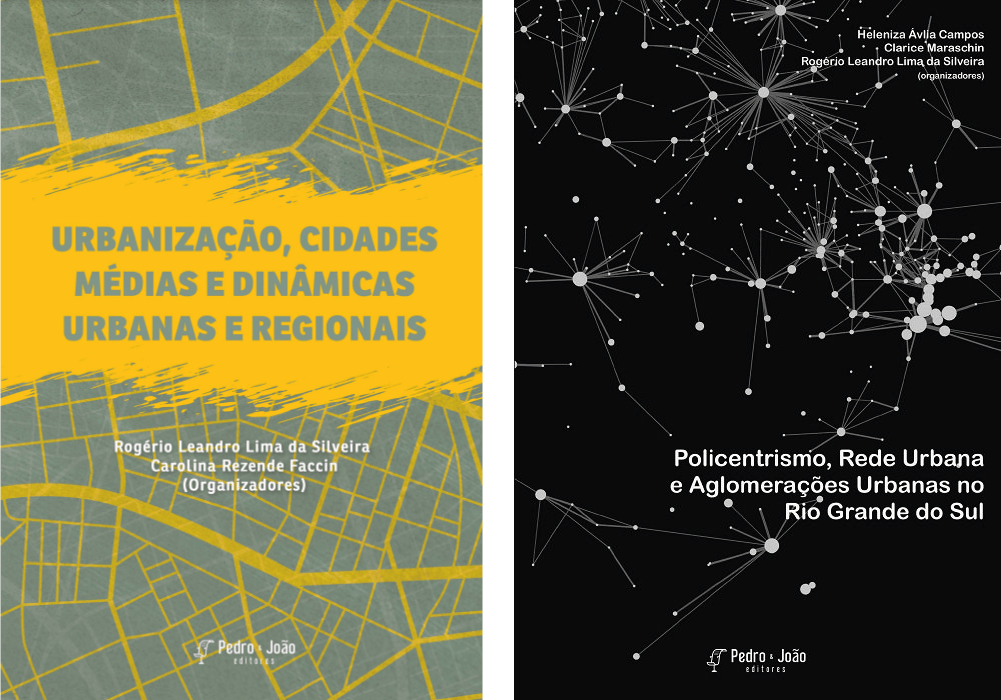
- Silveira & Faccin (2021): E-book Organization.
- Campos, Maraschin & Silveira (2021): Author of chapters 9, 10, 11, and 12.
Published Papers:
- Silveira et al. (2017) / Silveira, Brandt & Faccin (2018): Exploratory studies from the Rio Pardo Valley.
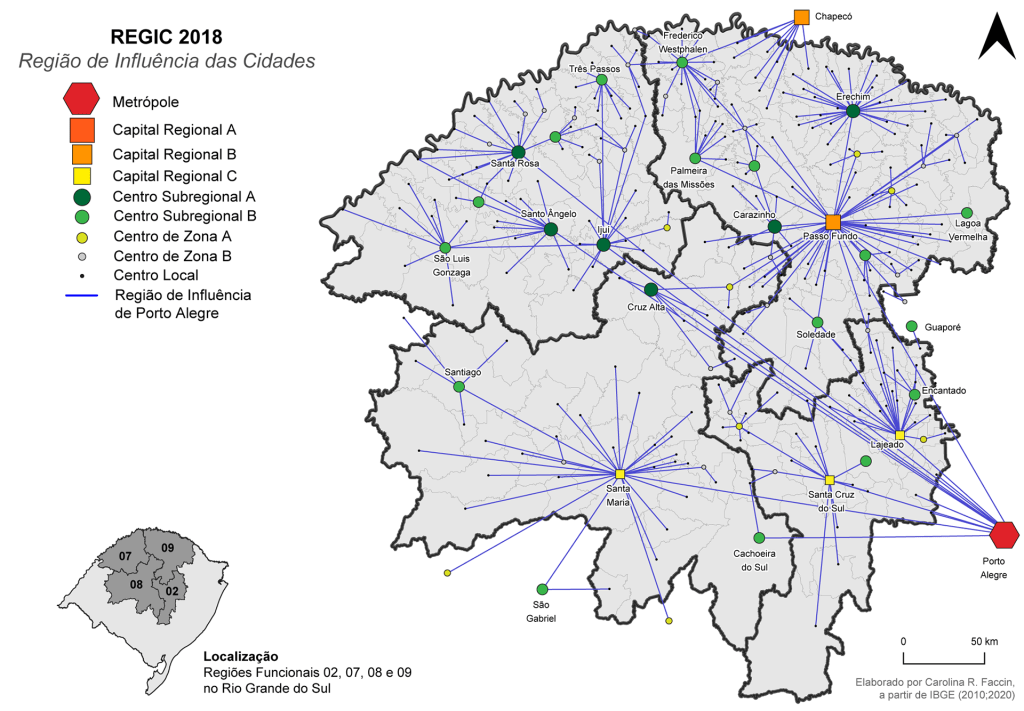
- Silveira et al. (2019) / Silveira et al. (2019): Analysis of the Vales-RS region and the medium-sized cities of Santa Cruz do Sul and Lajeado.
- Silveira et al. (2020) / Silveira, Faccin & Krug (2021): Studies on the central region of RS and the medium-sized city of Santa Maria.
- Silveira et al. (2022): Spatial relations of the central-west region of RS, based on medium-sized cities.
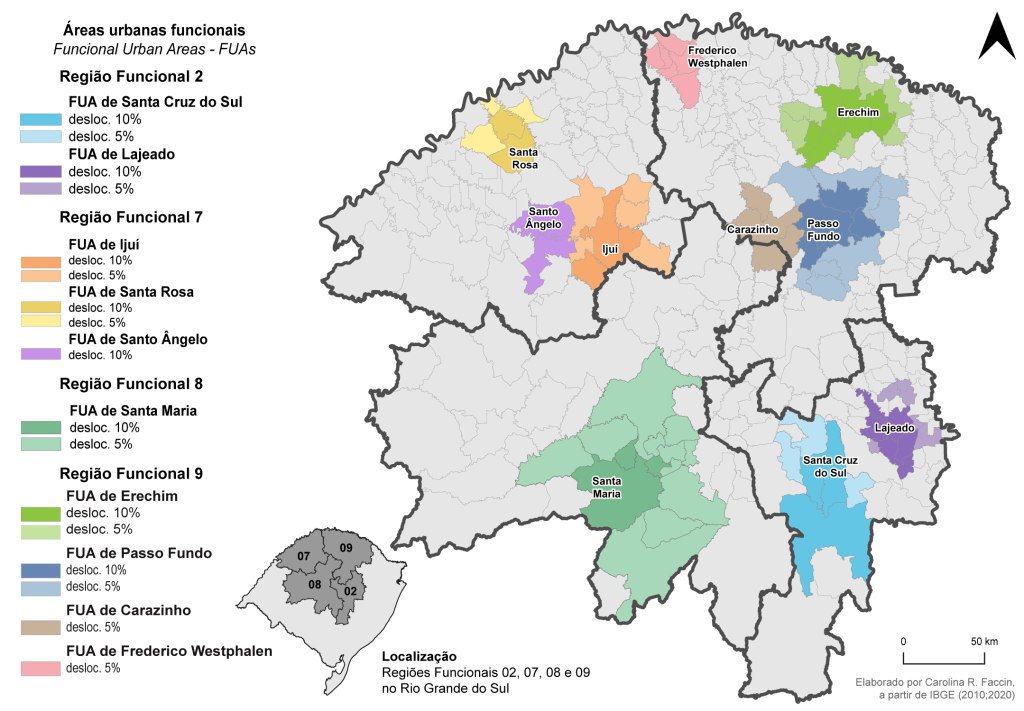
- Silveira, Faccin, Silveira & Seibert (2022): Possible functional urban areas and intermediate cities in Functional Region 7, in Rio Grande do Sul.
- Silveira, Faccin, Silveira & Seibert (2023): Synthesis analysis of the four regions studied, identifying functional urban areas and the centrality of medium-sized cities.


 Carolina Faccin